Gratitude on the Golf Course: How Appreciation Can Improve Your Mental Game

 Golf is a game of challenges, opportunities, and unexpected moments. Some days, everything seems to click. Your drives find the fairway, your putts fall, and your confidence is high. Other days, nothing seems to go according to plan.
But what if the secret to enjoying golf and improving your performance wasn’t always about fixing your swing?
What if it started with something much simpler?
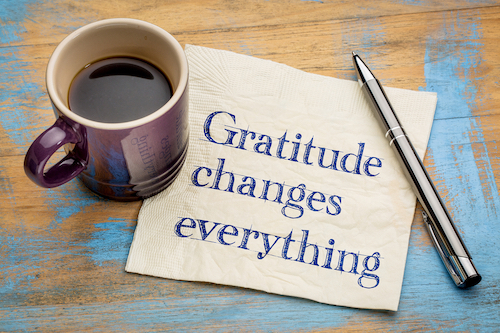
Gratitude.
The way you think about your game can have a powerful influence on how you feel, how you respond, and ultimately, how you play.
Your Focus Shapes Your Experience
One of the most important lessons we can learn about the mental game of golf is that where we direct our attention matters.
Tony Robbins often emphasizes the connection between our focus, emotional state, and actions. When we focus on everything going wrong, frustration grows. When we intentionally shift our attention toward what is possible, we create an opportunity for a different response.
Think about your last round of golf.
Did you spend more time thinking about the shots you missed or appreciating the shots you hit well?
Did you focus on the three-putt that frustrated you or the beautiful afternoon you spent doing something you love?
Gratitude doesn’t mean pretending a bad shot was good. It means recognizing that one disappointing moment doesn’t have to define your entire experience.
You may not control every shot, but you can choose where to place your focus.
Don’t Let Negative Thinking Take Over
Every golfer experiences negative thoughts.
Maybe you missed a short putt, hit a ball into the water, or struggled with a club that normally feels comfortable.
Suddenly, the internal conversation begins.
Why do I always do this?
I can’t believe I missed that.
Here we go again.
This is where mental awareness becomes so important.
Using the principles behind my BLAB approach, golfers can learn to recognize when their thoughts are becoming distractions rather than helpful guidance.
Instead of allowing negative mental chatter to take control, interrupt the pattern.
Pause. Recognize the thought. Redirect your attention.
Ask yourself:
What is one thing I can appreciate about this moment?
Maybe it’s the opportunity to recover. Maybe it’s the chance to practice patience. Maybe it’s simply being outside, enjoying the game.
That small shift can help you approach your next shot with a clearer mind.
Raise Your Mental Lid
John Maxwell’s Law of the Lid teaches that our level of effectiveness is influenced by our leadership ability.
I believe there is an important connection to golf.
Your physical skills matter, but your mental habits can influence how effectively you use those skills.
You may have a beautiful swing, excellent equipment, and hours of practice behind you. But if frustration, fear, or negative expectations constantly interfere with your decisions, you may struggle to perform at your potential.
Think of your mental game as your personal performance lid.
When you strengthen your awareness, emotional control, and positive thinking, you create more room for your abilities to shine.
Gratitude is one way to begin raising that lid.
Instead of saying, I’m terrible at putting, try, I’m grateful for the opportunity to improve my putting.
One statement closes the door on possibility. The other opens it.
Five Simple Ways to Practice Gratitude During Your Round
Gratitude is most powerful when it becomes a habit rather than an occasional thought.
Here are five ways to bring more appreciation into your golf game:
- Before your first tee shot, appreciate the opportunity. Take a moment to recognize how fortunate you are to be playing golf today.
- Celebrate small victories. A smart decision, a solid chip, or a good recovery shot deserves recognition, even if the score isn’t what you hoped.
- Find the lesson in a difficult shot. Instead of criticizing yourself, ask what the experience can teach you.
- Appreciate the people and surroundings. Golf provides opportunities for friendship, fresh air, beautiful scenery, and meaningful experiences.
- End your round with three positives. Before reviewing your score, identify three things you appreciated or did well.
These habits may seem simple, but practicing them consistently can change how you experience the game.
A Positive Mindset Is a Choice, Not a Perfect Round
Being positive doesn’t mean you never get frustrated.
It doesn’t mean you ignore mistakes or stop working to improve.
It means you refuse to let one difficult moment determine what happens next.
Some of the strongest golfers aren’t necessarily the ones who hit every shot perfectly. They’re the ones who know how to recover mentally when things don’t go their way.
They recognize the disappointment, learn what they can, and move forward.
And that is a skill every golfer can develop.
Take Gratitude Beyond the Golf Course
One of my favorite things about the mental game of golf is how closely it connects to everyday life.
We all face challenges, disappointments, and situations beyond our control.
Just as we can’t control every bounce of the golf ball, we can’t control everything life sends our way.
But we can work on controlling our attitude, our focus, and our response.
When we practice gratitude on the golf course, we’re developing habits that can help us approach life with greater confidence, patience, and positivity.
The next time you step onto the first tee, remember: You don’t need a perfect round to have a wonderful day.
Sometimes, the biggest improvement in your golf game begins not with your swing, but with your mindset.
Play positive. Think positive. And remember to enjoy the game!
Ready to Strengthen Your Mental Golf Game?
I’m Debbie O’Connell, and I help golfers develop the confidence, focus, and positive mental habits that make golf more enjoyable and rewarding.
If you’re ready to improve the way you think on the course, let’s work together to build a stronger mental game.
Your best golf starts with your mindset!